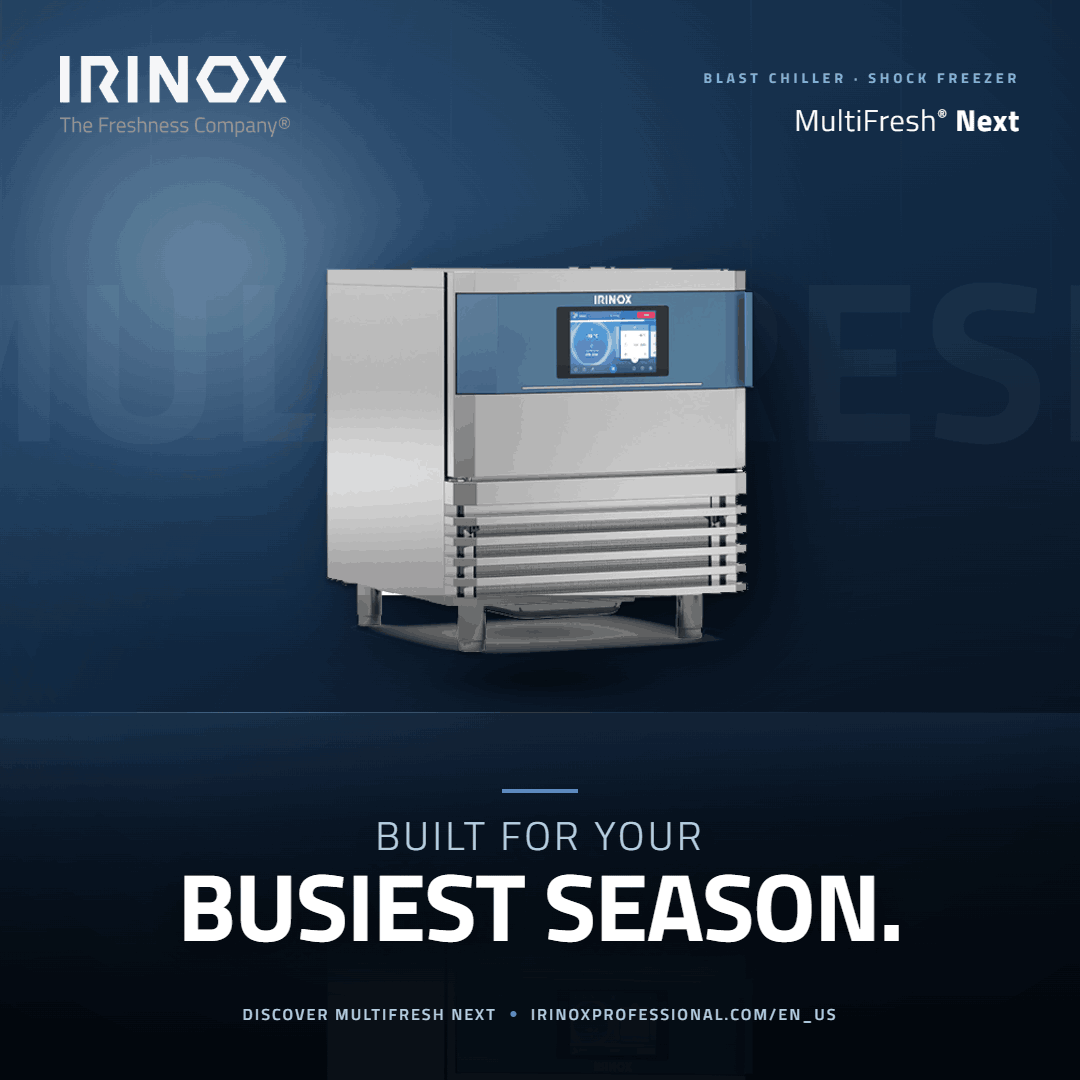
Summer Heat, Cold Precision: How Blast Chillers Keep Food Safe When Temperatures Spike
June brings longer days and warmer kitchens, which means food safety challenges spike just as demand peaks. For any foodservice operation running at summer capacity, the margin between perfect food and a safety violation gets razor-thin. Here's what blast chilling does that nothing else can.
The June Reality Check
Summer is when kitchen temperatures, and food cost resets, force hard choices. A traditional walk-in or reach-in cooler can take hours to bring hot food down to safe holding temperatures. In that time window, bacteria multiply exponentially. One shift of improper cooling temperatures isn't just a health code violation; it's a liability.
Blast chillers close that gap. Instead of cooling food passively over 2–3 hours, they bring a batch of soup, stock, or prepared components from 140°F to 38°F in minutes. The science is simple. The difference in your operation is massive.
Why This Matters Right Now
Peak season compliance pressure is real. Summer staffing is tight, kitchens are busier, and food safety audits don't pause. A single HACCP violation during summer service can:
- Trigger immediate corrective action orders
- Cost thousands in rework, lost product, and staff disruption
Create liability exposure that lingers into fall
Heat management becomes a workflow problem. In June, your cooler space is already full. A batch of prepared sauces, compotes, or cooked proteins sitting at room temperature waiting for cooling time isn't just inefficient, it's compliance risk.
Quality degradation accelerates in heat. The longer food spends in the danger zone, the more quality loss you absorb. Color fades. Texture breaks down. Flavor compounds evaporate. For fine dining or high-end catering, that's not just a food safety issue; it's a product quality disaster.
How Blast Chilling Solves the Summer Problem
Speed eliminates the compliance window. A blast chiller brings food out of the danger zone (41°F–135°F) in 6–10 minutes instead of 90–180 minutes. That's not incremental improvement—it's a categorical shift in your ability to execute cook-chill workflows reliably.
Automation removes human error. Manual cooling requires staff to monitor temperatures, log times, and make judgment calls in a busy kitchen. One forgotten timer = one violation. Blast chillers with integrated HACCP logging (like FreshCloud®) document every cycle automatically, giving you audit-proof records and eliminating the guesswork.
Precision preserves quality. Because blast chillers work fast instead of slow, they minimize crystal ice formation and cell damage. Your cooked food stays closer to its original texture, color, and flavor. In summer when you're running higher volume with lower margins, that quality retention is the difference between repeat customers and returns.
The Hidden Summer Advantage: Space and Flexibility
Every cooler inch counts in summer. With a blast chiller, you're not using your reach-in as a cooling station for 2 hours per batch. You blast in 10 minutes, pull the product into cold storage at safe temperature, and your cooler is available for the next task. That flexibility compounds over a busy shift.
Also: if your operation is running multiple prep shifts (breakfast prep, lunch prep, afternoon prep for evening service), a blast chiller lets each shift hand off safely cooled product to the next without the limbo period of "waiting for it to cool."
What You Need to Know About Blast Chiller Selection
Not all blast chillers are equal, especially for summer duty. Look for:
- Uniform cooling — units that chill from all sides (not just bottom) prevent the "cold spots and hot spots" that can hide food safety violations
- Integrated logging — HACCP-compliant systems (like FreshCloud®) that log temperature and time automatically, creating the audit trail you'll need
- Capacity that matches your peak season volume — summer is when you find out if your unit was undersized. Plan for your busiest week in July, not your average week in April
Reliability and support — if your chiller goes down in July, you have a food safety emergency. Choose a brand with fast service response
The June Opportunity
June is actually the ideal month to invest in blast chilling—before peak summer season hits. If you're auditing your food safety setup right now, or if you've had close calls with cooling times, June is when you can:
- Evaluate blast chilling as part of your summer readiness plan
- Get equipment installed and staff trained before the rush
- Start capturing data and building your compliance documentation
Eliminate one of the most vulnerable gaps in most foodservice HACCP plans
The Real Payoff
Blast chilling isn't about speed for speed's sake. It's about removing the single largest vulnerability in summer food service: that uncontrolled cooling window. Every minute food spends in the danger zone is an opportunity for bacterial growth, quality loss, and compliance risk.
When temperatures spike outside, your precision inside keeps everything safe. That's what separates operations that survive summer with their reputation intact from operations that don't.
The Freshness Company.
Irinox blast chillers bring food from cooked to cold in minutes—not hours. That's precision that matters, especially in summer.