Designing the Production Week
Fresh Thinking | Edition 4: Designing the Production Week
Cook less often. Plan around cooling.
Most kitchens cook every day because that’s how they’ve always operated. But what if the production schedule could work differently? Often, the limiting factor is simple: how quickly food can be cooled.
That single step influences the entire week. It determines when prep begins, why afternoons become rushed, and why the same sauce might be prepared several times in just a few days.
In Edition 3, we explored how slow cooling affects food yield. This edition takes the next step: planning your production week around efficient cooling.
Why Kitchens Cook Every Day
Before hot food can be safely stored, it must be cooled through the temperature danger zone, down to under 41°F before it can be wrapped or put a lid on. Without a reliable cooling process, preparing large batches becomes more challenging. Food takes longer to cool, moisture and yield can be lost, and valuable walk-in space fills up quickly.
As a result, many kitchens prepare smaller batches closer to service. While this approach works, it also means prep competes with service for time, space, and staff.
What a Production Week Looks Like
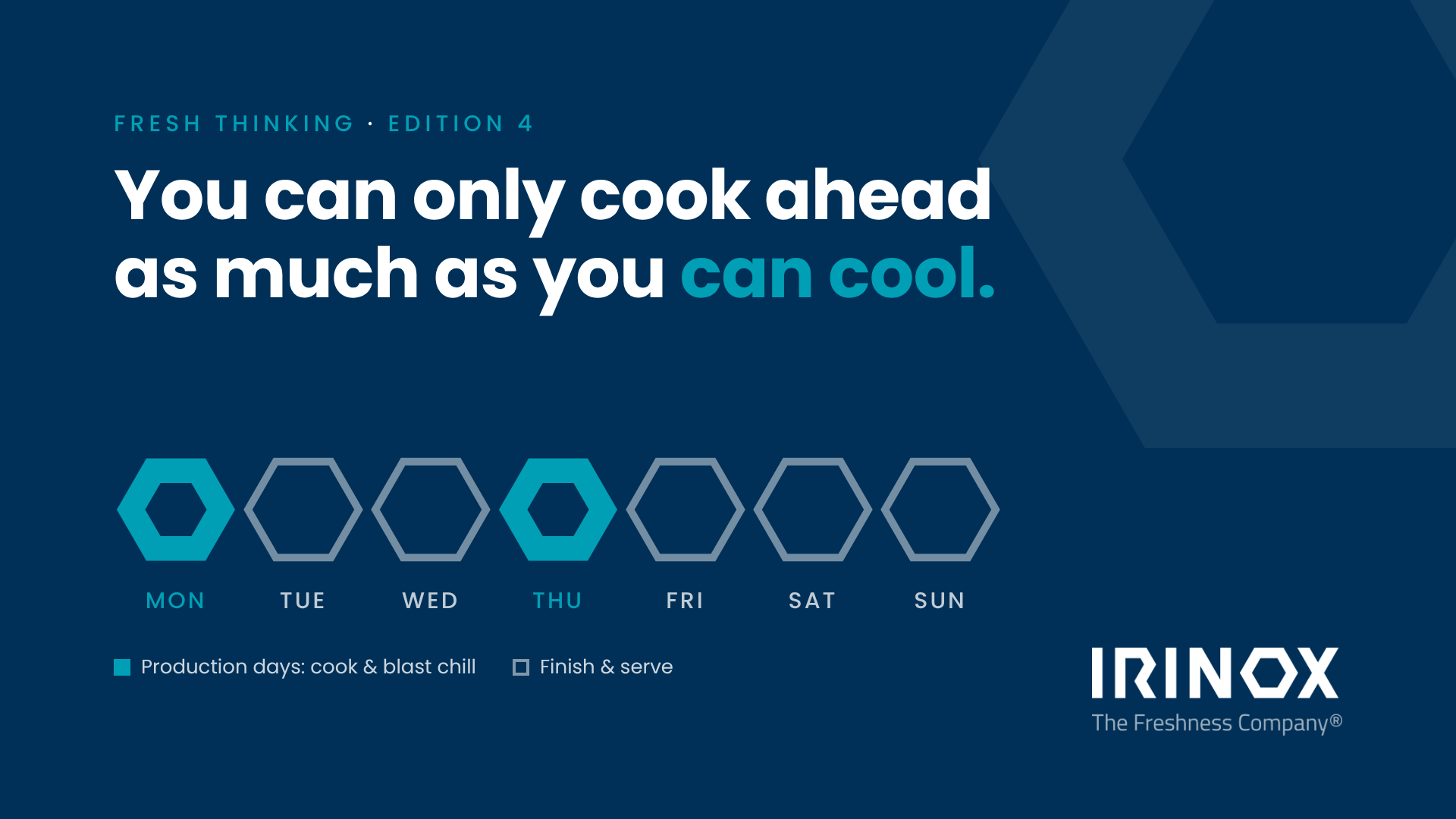
A planned production week takes a different approach. Instead of preparing a little of everything every day, the kitchen dedicates one or two days to batch cooking essentials such as stocks, sauces, braises, and cooked grains. These items are cooled promptly and stored until needed.
On the remaining days, the team focuses on finishing, portioning, and serving. Prep becomes more predictable, repetitive cooking is reduced, and the busiest service hours become easier to manage.
Of course, not everything should be prepared in advance. Fried foods, delicate garnishes, and other items that depend on freshly prepared textures still need to be prepared close to service. The goal isn’t to cook everything ahead. It’s to avoid repeating work that could be planned more efficiently.
Where Blast Chilling Fits
A successful production plan depends on one essential step: cooling large batches quickly and consistently.
That’s where chilling comes in. IRINOX MultiFresh® Next and EasyFresh® Next are designed to bring food to +37°F at the core, even when starting from boiling-hot temperatures. By rapidly cooling food, they help preserve quality and support more efficient production planning.
With blast-chilled food maintaining its freshness and quality for up to three times longer, kitchens can prepare more in advance, reduce repetitive prep, and make better use of their production and service time.
Coming Next: K-12 Cost Per Plate
In Edition 5, we’ll explore how this approach applies to school kitchens, from cooking and chilling to reheating and serving, and how each step can influence the cost per plate.