The Kitchen Loss That Never Shows Up on an Inventory Sheet
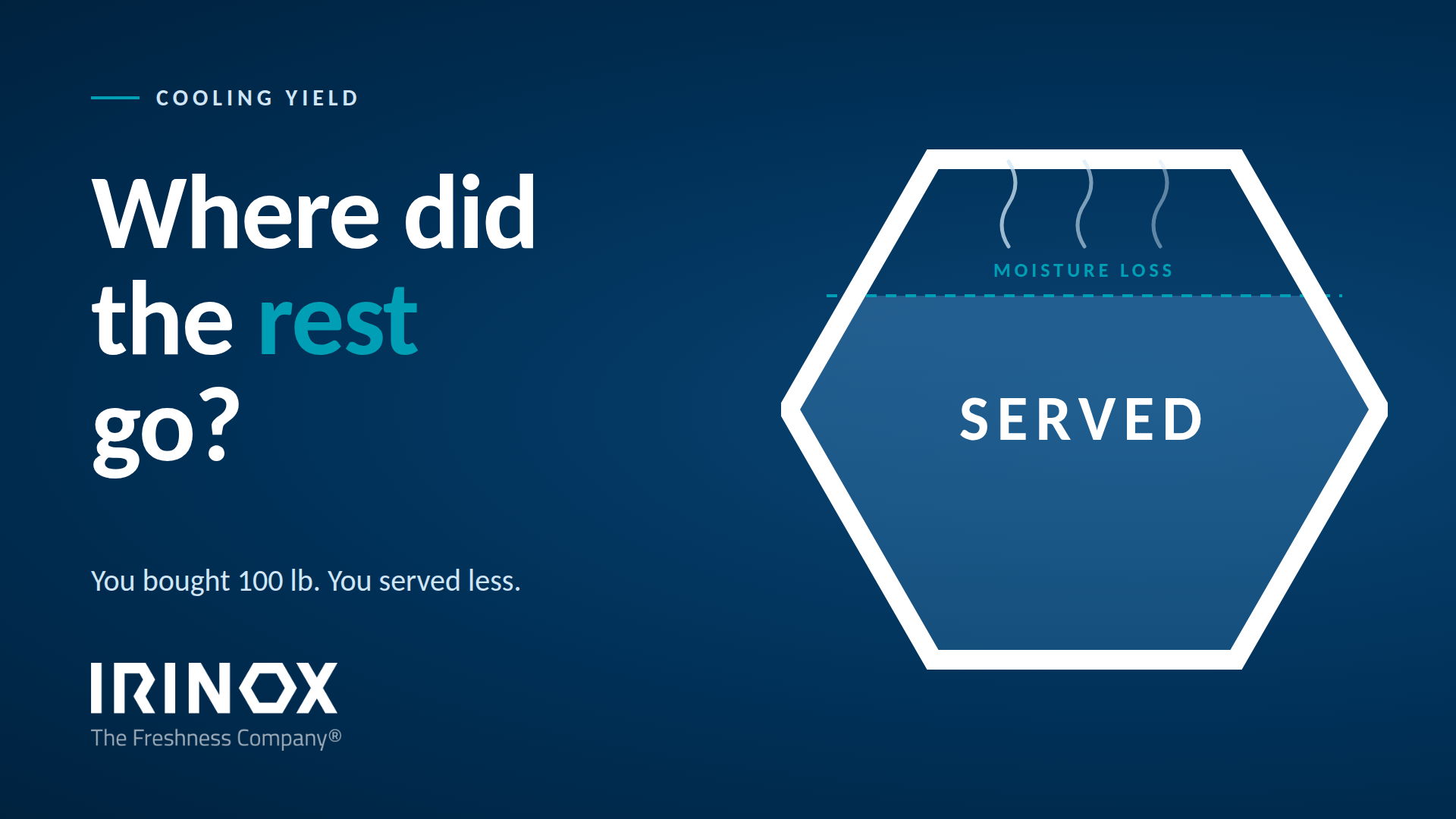
You Bought 100 lb. You Served Less. Where Did the Rest Go?
The difference didn't necessarily go in the trash. It may have disappeared somewhere between the oven and the walk-in, through moisture loss that was never measured, recorded, or noticed.
The loss nobody logs
A dropped tray gets noticed. A missed prep item gets noticed. But moisture lost during slow cooling doesn't appear on an inventory sheet, a waste log, or an invoice. By the time the product is weighed again, some of its original weight is simply gone. Because nothing broke and nothing spilled, nobody goes looking for it.
Where it actually happens
Every hot product that cools slowly spends time exposed to moving air while its surface is still warm. During that time, moisture can leave the food through evaporation. The longer the cooling process takes, the longer that exposure continues.
That means cooling affects more than food safety. It can also affect how much product ultimately makes it to the plate. This is where food safety and yield intersect.
Find your own number
We're not going to give you a generic percentage. A number that isn't yours doesn't tell you much about your operation, and every product, batch size, cooling method, and kitchen setup is different. Try this instead:
- Weigh a tray of product immediately after cooking.
- Cool it using your current process.
- Weigh the same tray once it has fully cooled.
- Subtract the second weight from the first.
Multiply the difference by your cost per pound.
That's an estimate of what the batch loses before a single portion is served. Multiply it by how often you produce the item each week, and you have a number specific to your kitchen.
Build a baseline for free
You don't need new equipment. Pick one product you make regularly and keep the product, batch size, and load depth consistent. Weigh a tray after cooking and again after cooling, once a day for a week, then calculate the average.
From there you can decide whether the loss is significant enough to address, whether your cooling process could improve, or whether the impact is small enough for your operation to accept. What matters is that the decision rests on your own numbers, not a guess.
Where a faster cool can pay you back
Blast chilling rapidly lowers the temperature of cooked food. That helps it move through the temperature range where bacterial growth is a concern, and it limits the time the product is exposed to conditions that can contribute to moisture loss. A faster, controlled cooling process can help protect both the safety and the value of the food you've already paid for.
That's one of the principles behind MultiFresh® Next and EasyFresh® Next, IRINOX blast chilling and freezing systems designed to rapidly and consistently cool food. Rapid cooling can also support longer product life and help preserve food quality, giving operators more flexibility in production and service.
Food safety tells you why temperature control matters. Yield tells you what that control can mean for the product you actually paid for. Both come from the same cooling process, but the second half is often overlooked.